Skip to content


Discover the key differences between a bill of lading and air waybill, and choose the right one for your shipment.
When it comes to international trade, a Bill of Lading (B/L) is one of the most important documents that ensure the safe and efficient transport of goods from one place to another. In this blog post, we’ll cover everything you need to know about Bill of Lading, including its purpose, types, functions, and importance.
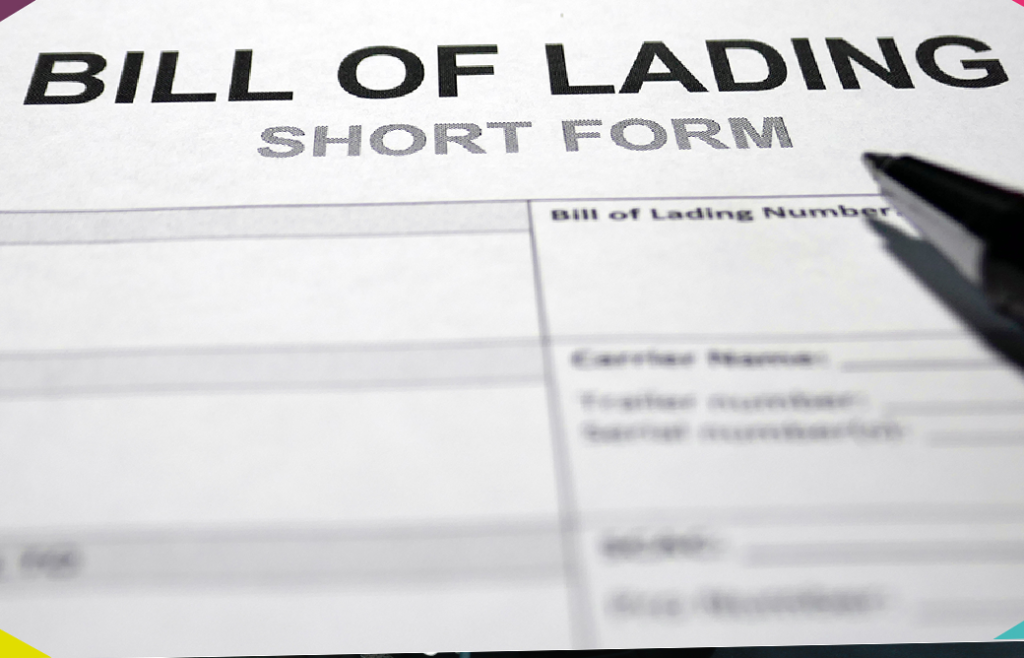
A Bill of Lading is a legal document that serves as a contract between the shipper (the person or company that sends the goods), the carrier (the company that transports the goods), and the consignee (the person or company that receives the goods). It contains important information about the goods being shipped, such as their quantity, type, and destination.

The primary purpose of a Bill of Lading is to ensure that the goods being shipped are properly identified, accounted for, and delivered to the correct destination. It also serves as a receipt for the goods, acknowledging that they have been loaded onto the carrier’s vessel or other means of transport. In addition, a Bill of Lading can be used as a legal document in case of disputes or claims that may arise during the shipment.
A Bill of Lading is typically issued by the carrier or their agent. However, in some cases, the shipper or consignee may also issue the Bill of Lading.
There are several types of Bill of Lading, including:
Apart from being a contract, receipt, and legal document, a Bill of Lading also serves several other functions, including:
The importance of a Bill of Lading cannot be overstated. It helps to ensure that the goods being shipped are properly identified, accounted for, and delivered to the correct destination. It also provides a legal framework for resolving any disputes or claims that may arise during the shipment.
With the advent of technology, it’s now possible to track the movement of goods using a Bill of Lading. Many carriers offer online tracking services that allow shippers and consignees to monitor the progress of their shipments in real-time.
Bill of lading tracking is essential to ensure that goods are delivered on time, and the receiver is aware of the shipment’s progress. With tracking, both the shipper and receiver can monitor the shipment’s status, including the departure, arrival, and current location of the goods. This information helps to identify any delays or disruptions in the delivery process, allowing for quick resolution and mitigation.
Bill of lading tracking works by utilizing a unique identifier assigned to each BOL, known as the Bill of Lading number. This number is used to track the shipment at each stage of its journey, from the point of origin to the final destination. The carrier updates the tracking information as the shipment progresses through the supply chain, allowing for real-time visibility into the shipment’s status.
There are several benefits of using bill of lading tracking, including:
| Benefits of Using Bill of Lading Tracking |
|---|
| Provides real-time updates on shipment location and status |
| Enables quick resolution of any shipping issues |
| Increases transparency and accountability in supply chain |
| Improves customer service by providing accurate delivery information |
| Reduces the risk of lost or delayed shipments |
| Enhances overall efficiency in logistics and inventory management |
Conclusion: Bill of lading tracking is a critical component of the shipping process, providing visibility and transparency throughout the supply chain. By utilizing tracking technology, shippers and carriers can improve efficiency, enhance security, and provide better customer service. In today’s fast-paced world, bill of lading tracking is an essential tool for any business involved in the transportation of goods.
In recent years, there has been a shift towards the use of electronic Bills of Lading (eB/Ls). An eB/L is a digital version of a traditional Bill of Lading that is created, signed, and transmitted electronically.
The advantages of using eB/Ls include:
Despite their advantages, there are also some challenges associated with the use of eB/Ls. These include:
| Advantages of Electronic Bill of Lading | Disadvantages of Electronic Bill of Lading |
|---|---|
| Faster and more efficient transfer of ownership and payment of goods. | Lack of standardization and legal recognition can hinder widespread adoption. |
| Reduced costs for storage, printing, and transportation of paper bills. | Concerns over security, privacy, and the potential for fraud or hacking. |
| Enhanced transparency and real-time tracking of goods in transit. | Technical barriers such as the need for a reliable internet connection and compatible software. |
| Simplified documentation process and streamlined supply chain operations. | Resistance from traditional stakeholders who are accustomed to paper-based processes. |
When it comes to shipping goods internationally, two important documents that are used are the bill of lading and the air waybill. Both of these documents serve a similar purpose in that they are used to provide details about the shipment of goods. However, there are key differences between the two that are important to understand. In this article, we will explore the differences between a bill of lading and an air waybill, and when each document is typically used.
A bill of lading (B/L) is a legal document that is issued by a carrier to a shipper. It serves as a contract between the shipper and the carrier for the transportation of goods. The B/L includes information about the shipment, such as the type of goods being transported, the quantity of goods, and the destination. It also includes details about the carrier, the shipper, and the consignee.
There are two types of bills of lading: negotiable and non-negotiable. A negotiable bill of lading allows for the transfer of ownership of the goods to be transferred by endorsement, whereas a non-negotiable bill of lading does not.
An air waybill (AWB) is a document used in air transportation that serves a similar purpose to a B/L. It provides information about the shipment of goods, including the type and quantity of goods, and the destination. The AWB is typically issued by an airline or freight forwarder.
Unlike a B/L, an AWB is not a document of title, which means that it does not represent ownership of the goods. Instead, it serves as a receipt for the goods and provides evidence of the contract of carriage between the shipper and the carrier.
The main difference between a bill of lading and an air waybill is the mode of transportation. A B/L is used for ocean or inland waterway transport, while an AWB is used for air transport.
Another difference is that a B/L can be negotiable, which means that ownership of the goods can be transferred by endorsement, whereas an AWB is not negotiable. Additionally, a B/L is a document of title, which means that it represents ownership of the goods, while an AWB is not.
A B/L is typically used for shipments that are transported via ocean or inland waterway. It is required for all international shipments and is also used for domestic shipments in some countries.
An AWB, on the other hand, is used for air transportation of goods. It is required for all international air shipments and is also used for some domestic air shipments.
A bill of lading serves as a contract, receipt, and legal document between a shipper, carrier, and consignee for the transport of goods.
A bill of lading is usually created by the carrier or their agent, but it can also be created by the shipper or a third-party logistics provider.
A bill of lading is a document that provides evidence of the contract for the transport of goods, while an invoice is a document that provides evidence of the sale of goods and the amount due for payment.
The carrier or their agent is responsible for issuing the bill of lading, but it is the shipper’s responsibility to ensure that the information on the bill of lading is accurate.
The term “bill of lading” comes from the medieval French word “bille,” which means a written order or note, and the word “lading,” which refers to the loading of cargo onto a ship.
A master bill of lading is a document that covers the transportation of goods by multiple shippers or on behalf of a freight forwarder. Its main purpose is to consolidate shipments and simplify the documentation process.
The bill of lading can be traced back to medieval Europe, where it was used as a receipt and evidence of the contract for the transport of goods.
A bill of lading is a legal document that serves as a contract, receipt, and evidence of the transfer of goods, while “shipping” refers to the process of transporting goods from one location to another.